In short
- A manufacturing ERP keeps sales, purchase, stock, production, quality and accounts in one system, working from the same records.
- Its value lies less in any single module than in the links between them.
- The right time to look at one is when coordination, not effort, is what slows the business down.
The short answer
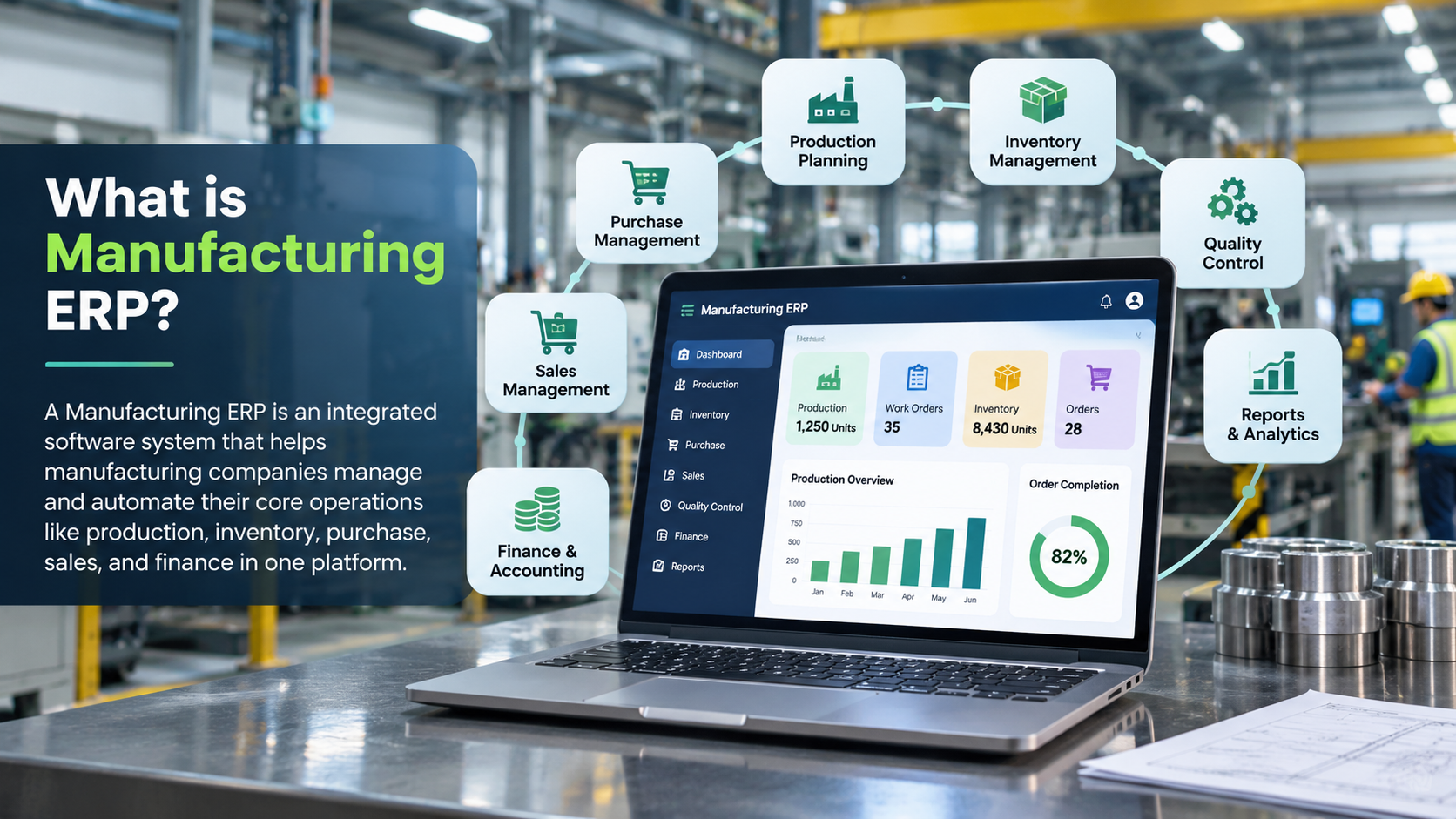
ERP stands for Enterprise Resource Planning. The name is broad, but the idea is simple: one system where every department records its work, so everyone works from the same information.
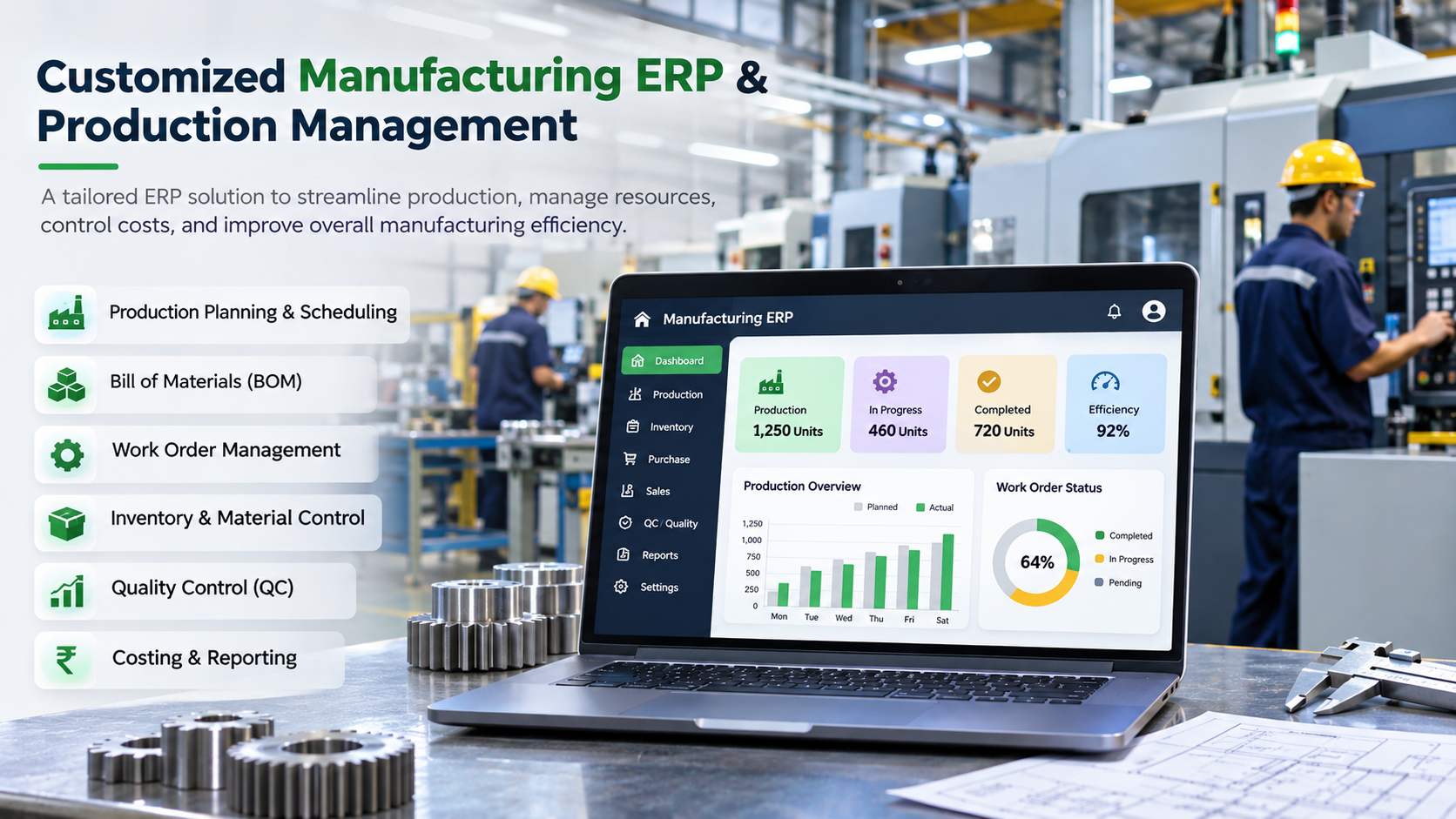
A manufacturing ERP is built around how a factory actually runs. Alongside accounts and sales, it handles what general business software usually leaves out: Bills of Materials, work orders, material requirements, job work, quality checks on received material and the movement of stock between the store and the shop floor.
What a manufacturing ERP covers
- Sales and CRM: enquiries, quotations, sales orders, dispatch and invoicing.
- Purchase: requisitions, approvals, purchase orders and supplier records.
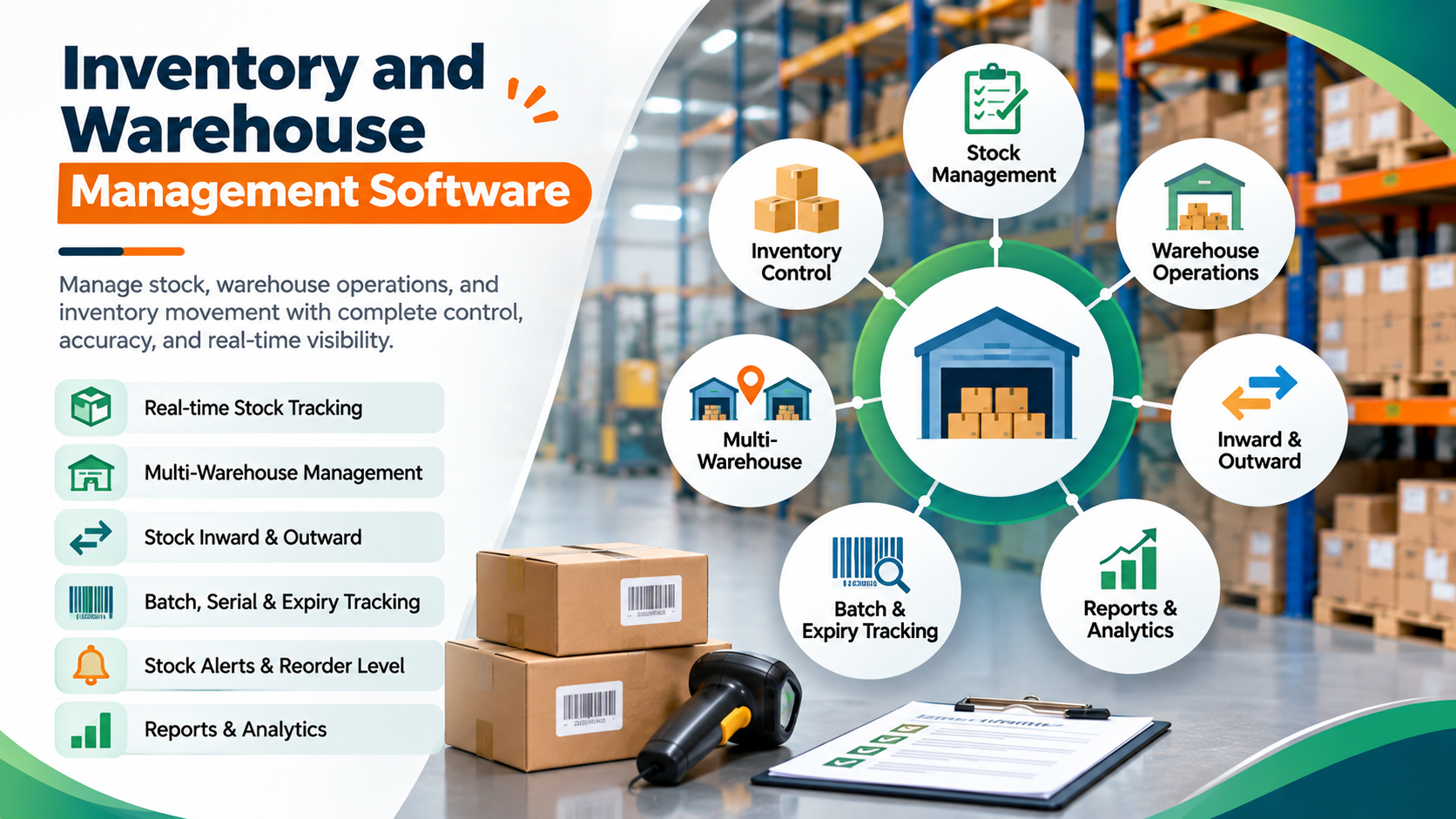
- Inventory: goods receipt, stock in each warehouse, transfers and issues.
- Production: BOMs, work orders, material requisitions and finished goods.
- Quality: inspection of received material and production, with accepted and rejected quantities.
- Finance and accounting: ledgers, receipts, payments and GST billing.
- Reports: one view across all of the above.
Not every business needs every module on day one. Many start with the areas that hurt most and add the rest later.
Why the links matter more than the modules
Most factories already have software for some of these jobs: an accounting package, perhaps a separate billing tool, Excel for production. Each works well enough on its own. The trouble is the space between them, where information is retyped, delayed or lost.
Take one sales order. In a connected system, confirming it can show whether finished stock is available, what production needs to make, which materials are short and what purchase has to order. When the goods are dispatched, the invoice and the stock reduction follow from the same record. Without the links, each of those steps is a phone call, an email or a spreadsheet, and each is a chance for a mistake.
Signs a business has outgrown separate tools
- Nobody can say with confidence what is in stock without walking to the store.
- Delivery dates are promised without checking material or capacity.
- The same order is typed into three different places.
- Month-end takes days because figures from different files do not match.
- Answering a customer's "where is my order?" takes several calls.
- Only one or two people really know how things work, and everything waits for them.
If several of these sound familiar, the business has probably grown past the point where effort alone can hold it together.
What an ERP will not do on its own
An ERP records and connects; it does not fix a process nobody has agreed on. If the store has no rule for issuing material, the software will faithfully record the confusion. The businesses that get the most from an ERP settle their basic rules first, such as who raises a purchase requisition, when a GRN is made and who approves a rejection, and then let the system hold everyone to them.
Manufacturing ERP from BS SOFT
BS SOFT has built software for manufacturing businesses since 2006. BS ERP for manufacturing manages production, inventory, purchase, sales, finance and customer relationships from one integrated platform, with quality, job work, mobile field sales and business reports as connected solutions.
Workflows can be customized to the way a plant actually runs, and each solution has its own page describing what it covers.