
In short
- Stock is only as accurate as the last movement someone forgot to record.
- A GRN for every receipt and an entry for every issue close most of the gaps.
- Count a few items often instead of everything once a year.
Why the stock report and the rack disagree
Ask any store manager and you will hear the same story. The report shows 200 units, the rack holds 140, and nobody knows where the other 60 went. Usually nothing was stolen. The stock moved without a record.
- Material was issued to the shop floor "for now", to be entered later.
- A delivery arrived on Saturday and the GRN was made on Tuesday.
- Rejected material was left in the same bin as accepted stock.
- One person counts in kilograms and another in pieces.
- Stock was shifted to the second godown in a tempo, with no transfer entry.
Software cannot stop someone carrying a box across the yard. What it can do is make the right entry quick enough that people actually make it, and make the gaps visible when they don't.
The transactions that keep stock accurate
Inventory software records every movement as a transaction. The stock balance is simply the result of those transactions, which is why each one matters.
- Goods Receipt Note (GRN): records what arrived against a purchase order, on the day it arrived.
- Material inward and outward: everything that enters or leaves the store, including returns.
- Stock transfer: movement between warehouses or locations, so each one shows its own balance.
- Issue and consumption: material handed to production, linked to the job it was used for.
- Adjustment: a correction after a physical count, with a reason, so it does not hide a recurring problem.
Warehouse-wise stock
Once a business has more than one store, a company-wide total is not enough. The plant may show plenty of stock while the branch that has to dispatch has none. Warehouse-wise inventory shows the balance for each location and makes every transfer explicit.
It also helps to separate stock by status, not just by place. Material waiting for a quality check, accepted material and rejected material should never be counted as the same thing, even when they sit in the same building.
Reports worth checking every week
- Stock summary by warehouse: what is where, today.
- Pending GRNs: deliveries received but not yet entered or inspected.
- Inward and outward register: the movements behind any balance you doubt.
- Slow-moving items: stock that has not moved for months and is tying up cash.
- Items below the level you want to keep: what needs ordering now.
A report only helps if someone owns it. Decide who looks at each one, and on which day.
Count little and often
An annual stock-take is needed for the books, but it finds problems months after they happened. For control, cycle counting works better: count a handful of items every week, with fast-moving and high-value items counted most often. When a count does not match, look up that item's transactions straight away, while people still remember what happened.
Inventory in BS SOFT
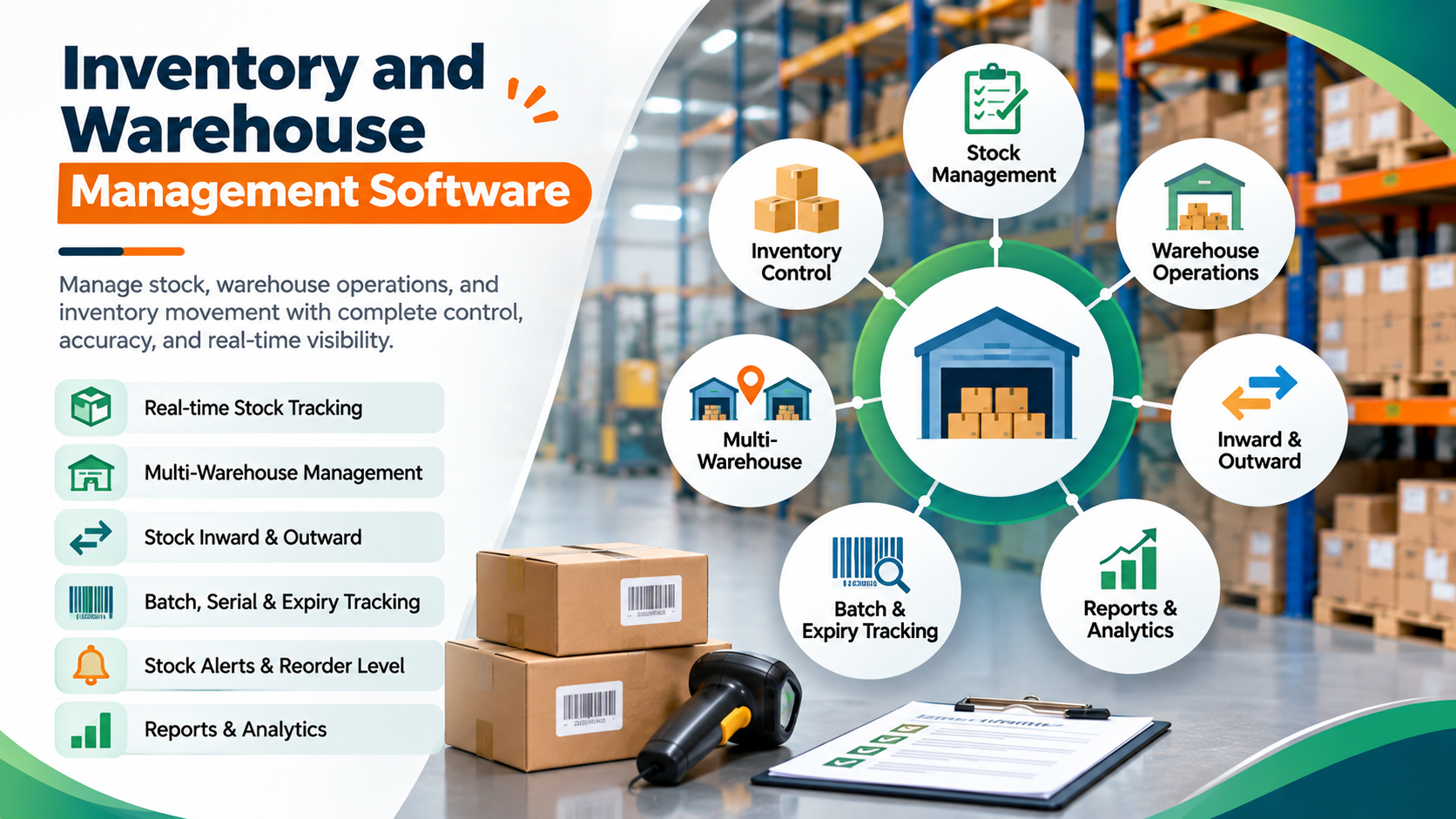
BS SOFT INDIA offers inventory management solutions that help businesses organize warehouse activities and maintain systematic stock records. GRN entries document received materials, inward and outward movements and warehouse transfers are recorded, and stock reports give visibility into recorded transactions and available quantities.
Because inventory works together with purchasing, production and sales, a purchase order, a work order and a sales order all draw on the same stock figures. That shared view is what makes stock monitoring and inventory planning more reliable.